When you write your story, you take back control of it.
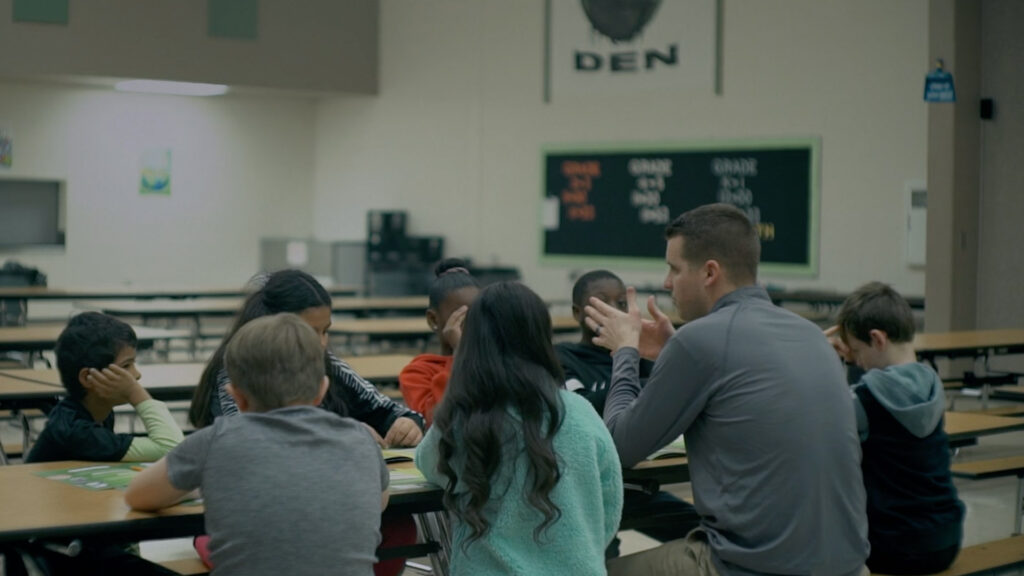
There’s a moment in every Discovery Series session when a student picks up a pen, stares at a blank page, and hesitates.
The prompt might be simple: “What’s something hard you’ve been through?” or “What’s a dream you have for your future?”
But the hesitation isn’t about finding words. It’s about something deeper: Do I dare put this on paper? If I write it down, does it become more real? Or does it become less heavy?
What happens next — when the student finally writes that first sentence — is more powerful than most people realize. It’s not just cathartic. It’s not just “getting feelings out.” It’s a scientifically proven pathway to healing, clarity, and growth.
Writing your story changes you. And for children and teens carrying trauma, hardship, or adversity, that change can be transformational.
The Pennebaker Studies: Writing as Medicine
The modern understanding of writing as a healing tool begins with Dr. James Pennebaker, a social psychologist at the University of Texas at Austin who stumbled onto something remarkable in the 1980s.
Pennebaker asked college students to write for 15 minutes a day, four days in a row, about either trivial topics (what they did that day) or their deepest thoughts and feelings about a traumatic or emotional experience. [^1]
The results were stunning:
Students who wrote about trauma:
- Made fewer visits to the health center in the months following the study
- Showed improved immune function (measured by T-cell response)
- Reported better mood and emotional well-being
- Even earned higher GPAs in the semester after writing [^2]
This wasn’t a one-time fluke. Over the next 30 years, Pennebaker and researchers worldwide replicated these findings across hundreds of studies with diverse populations — cancer patients, crime victims, college students, laid-off workers, maximum-security prisoners, and arthritis sufferers. [^3]
The pattern held: Writing about difficult experiences for just a few minutes improved physical health, emotional well-being, and even cognitive performance.
But why?
What Happens in the Brain When We Write Our Story
When something traumatic or difficult happens to us, the experience often gets stored in the brain in a fragmented, disorganized way — especially if we never had the chance to talk about it or make sense of it.
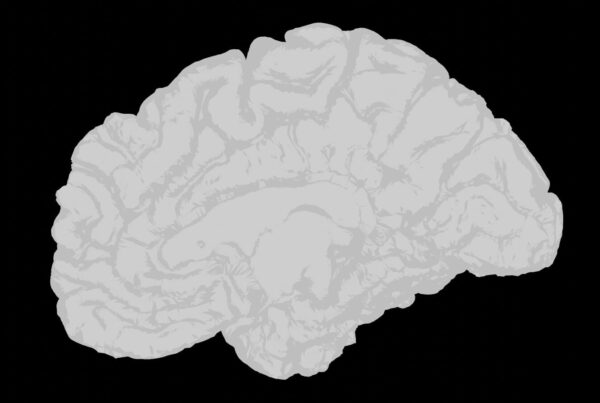
Dr. Bessel van der Kolk, trauma researcher and author of The Body Keeps the Score, explains that traumatic memories are often encoded in the emotional and sensory parts of the brain (the amygdala and brainstem) without being fully processed by the parts of the brain responsible for language and meaning-making (Broca’s area and the prefrontal cortex). [^4]
The result? The memory feels overwhelming, intrusive, and out of control. It shows up as flashbacks, nightmares, anxiety, or a constant sense of being on edge.
But when we write about the experience — when we put it into words — something neurologically shifts.
Writing Activates the Prefrontal Cortex
The act of writing about an emotional experience requires us to organize, structure, and narrate what happened. This process engages the prefrontal cortex — the part of the brain responsible for reasoning, perspective-taking, and emotional regulation. [^5]
As we write, we’re essentially moving the memory from the emotional brain to the thinking brain. We’re taking something that felt chaotic and giving it order. Something that felt too big to hold and putting it into sentences we can see.
Pennebaker’s research found that people whose writing showed increasing use of causal words (“because,” “since,” “therefore”) and insight words (“realize,” “understand,” “see”) experienced the greatest health benefits. [^6] They weren’t just venting — they were making meaning.
Narrative Identity: Writing the Self Into Being
There’s another reason writing is so powerful for young people, especially adolescents: identity formation.
Dr. Dan McAdams, a psychologist at Northwestern University, has spent decades studying “narrative identity” — the internalized story we tell about who we are, where we’ve been, and where we’re going. [^7]
McAdams’ research shows that adolescence and young adulthood are critical periods for constructing this narrative. Teens are asking: Who am I? What has shaped me? What do I want my life to mean?
The stories they tell about themselves — especially about difficult experiences — shape their identity going forward.
Here’s the key insight: We don’t just discover our story. We author it.
A teenager who writes, “My dad left when I was eight, and I’ve been angry ever since” is writing one kind of identity. But a teenager who writes, “My dad left when I was eight, and I’ve learned to rely on myself and the people who stayed” is writing a different future.
Both statements can be true. But the second one opens a door the first one closes.
McAdams calls this a “redemptive narrative” — a story structure where hardship is acknowledged but not final; where struggle leads to growth, insight, or strength. [^8] People who construct redemptive narratives about their lives show higher levels of well-being, generativity (giving back to others), and life satisfaction.
In other words: the story you tell about your past shapes the future you step into.
Why Workbooks and Journaling Work: Structure + Freedom
This is why the Discovery Series workbook format is so effective. It’s not accidental — it’s rooted in this science.
The workbook provides:
1. Structured Prompts (Scaffolding)
Open-ended journaling can feel overwhelming, especially for kids who’ve never been asked to reflect on their lives before. Prompts like “What’s something you’re proud of?” or “What’s something hard you’ve overcome?” give students a starting point without dictating the answer.
Research shows that structured writing (guided prompts) is often more effective than completely free writing, especially for people new to the process. [^9]
2. Privacy + Safety (The Page Doesn’t Judge)
For many students, writing feels safer than speaking — especially about sensitive topics. The page doesn’t interrupt, doesn’t judge, and doesn’t tell them they’re wrong.
As one Discovery Guide shared: “Some of my students won’t talk in group, but their workbooks are full. The page gives them permission to be honest.”
3. A Tangible Record (The Story Becomes Real)
When a student writes their story down, it becomes externalized — something they can see, hold, and reflect on. It’s no longer just swirling thoughts; it’s something concrete.
Pennebaker noted that participants often said things like, “I didn’t know I felt that way until I wrote it down.” [^10] The act of writing doesn’t just record thoughts — it clarifies them.
The Long-Term Ripple: Writing as Empowerment
Here’s the beautiful long-term effect of writing your story: once you’ve named your past, you can start choosing your future.
Students who work through the Discovery Series don’t just process what’s happened to them — they begin to articulate what they want to happen next. The final sessions ask them to dream, set goals, and identify obstacles (like substance abuse or destructive relationships) that could derail those dreams.
This is narrative agency — the belief that you are not just a character in a story being written to you, but the author of a story you’re writing for yourself.
Dr. McAdams writes:
“To live well is, in part, to author a meaningful life story.” [^11]
For a kid who’s been told — implicitly or explicitly — that their zip code, their family situation, or their past mistakes define their future, the act of writing a new story is an act of resistance and hope.
One Caring Adult + One Blank Page = One Rewritten Future
The Discovery Series doesn’t work because it’s a magic curriculum. It works because it creates the conditions for two transformative things to happen simultaneously:
- A caring adult listens (providing safety, co-regulation, and relationship)
- A young person writes (providing structure, meaning-making, and narrative agency)
Together, these two elements create what researchers call a “growth-promoting environment” — a space where healing, insight, and change become possible. [^12]
The neuroscience is clear. The psychology is proven. The outcomes are measurable.
But the magic is still in the moment: when a student looks up from their workbook, sees their Discovery Guide’s encouraging eyes, and realizes for the first time:
My story isn’t over. And I get to write what happens next.
The Invitation
If you’re a teacher, mentor, coach, or counselor, you already know that kids need more than academics. They need someone who sees them, hears them, and believes in them.
The Discovery Series gives you the structure and the space to be that person.
It’s not therapy. It’s not clinical. It’s relationship + reflection — two of the most powerful tools we have.
Because when a child writes their story in the presence of someone who cares, something changes.
Not just on the page.
In the brain. In the heart. In the future.
Learn more about bringing the Discovery Series to your classroom, mentoring program, or youth group at RewritingFutures.com.
References
[^1]: Pennebaker, J. W., & Beall, S. K. (1986). Confronting a traumatic event: Toward an understanding of inhibition and disease. Journal of Abnormal Psychology, 95(3), 274–281.
[^2]: Pennebaker, J. W., & Francis, M. E. (1996). Cognitive, emotional, and language processes in disclosure. Cognition & Emotion, 10(6), 601–626.
[^3]: Pennebaker, J. W. (1997). Writing about emotional experiences as a therapeutic process. Psychological Science, 8(3), 162–166.
[^4]: van der Kolk, B. (2014). The Body Keeps the Score: Brain, Mind, and Body in the Healing of Trauma. Viking.
[^5]: Lieberman, M. D., et al. (2007). Putting feelings into words: Affect labeling disrupts amygdala activity in response to affective stimuli. Psychological Science, 18(5), 421–428.
[^6]: Pennebaker, J. W., Mayne, T. J., & Francis, M. E. (1997). Linguistic predictors of adaptive bereavement. Journal of Personality and Social Psychology, 72(4), 863–871.
[^7]: McAdams, D. P. (2001). The psychology of life stories. Review of General Psychology, 5(2), 100–122.
[^8]: McAdams, D. P., Reynolds, J., Lewis, M., Patten, A. H., & Bowman, P. J. (2001). When bad things turn good and good things turn bad: Sequences of redemption and contamination in life narrative and their relation to psychosocial adaptation in midlife adults and in students. Personality and Social Psychology Bulletin, 27(4), 474–485.
[^9]: Frattaroli, J. (2006). Experimental disclosure and its moderators: A meta-analysis. Psychological Bulletin, 132(6), 823–865.
[^10]: Pennebaker, J. W. (2004). Writing to Heal: A Guided Journal for Recovering from Trauma and Emotional Upheaval. New Harbinger Publications.
[^11]: McAdams, D. P. (2013). The Redemptive Self: Stories Americans Live By (Revised and Expanded Edition). Oxford University Press.
[^12]: Smyth, J. M., & Pennebaker, J. W. (2008). Exploring the boundary conditions of expressive writing: In search of the right recipe. British Journal of Health Psychology, 13(1), 1–7.