It’s not programs that save kids. It’s people.
Josh Shipp, teen behavior expert and former at-risk foster kid, says it plainly: “Every kid is one caring adult away from being a success story.”
It’s a beautiful sentiment. But is it true?
Can one relationship really be that powerful? Can a single teacher, mentor, coach, or youth worker actually change the trajectory of a child’s life — especially a child facing poverty, trauma, family instability, or adverse childhood experiences?
The research is unequivocal: Yes.
In fact, the presence of at least one stable, caring adult in a child’s life is the single most powerful protective factor against the impacts of adversity. It outweighs programs, interventions, and resources. It’s the variable that matters most.
And here’s the stunning part: it doesn’t require a degree, a certification, or a budget. It requires a person who shows up.
The Science of Protective Factors
To understand why one caring adult matters so much, we need to understand the concept of protective factors — the conditions and relationships that buffer children against the negative effects of adversity.
The CDC-Kaiser Permanente Adverse Childhood Experiences (ACE) Study, one of the largest investigations ever conducted on childhood abuse and neglect, found that ACEs are shockingly common and strongly linked to negative outcomes later in life — including chronic disease, mental illness, substance abuse, and early death. [^1]
But here’s the critical finding that often gets overlooked: Not every child who experiences adversity ends up struggling. Some thrive despite difficult circumstances. The question researchers asked was: What makes the difference?
The answer, consistently, across decades of research: relationships.
The Harvard Study: Relationships Are the Active Ingredient
The Center on the Developing Child at Harvard University has spent years synthesizing research on child development, resilience, and adversity. Their conclusion is direct:
“The single most common factor for children who develop resilience is at least one stable and committed relationship with a supportive parent, caregiver, or other adult.” [^2]
Not a perfect family. Not wealth or resources. Not even the absence of trauma.
One stable, caring relationship.
The Harvard researchers describe this relationship as providing a “buffering effect” — it doesn’t eliminate stress or hardship, but it changes how that stress impacts the developing brain and body. The child learns that the world, while sometimes hard, also contains safety, trust, and care. That belief becomes the foundation for everything else. [^3]
Big Brothers Big Sisters: The Gold Standard Evidence
If you want to see this research in action, look at Big Brothers Big Sisters of America (BBBS), one of the most rigorously studied mentoring programs in the country.
A landmark study by Public/Private Ventures followed over 1,000 young people — half in BBBS mentoring relationships, half on a waitlist. The findings were staggering: [^4]
Youth with a Big Brother or Big Sister were:
- 46% less likely to start using illegal drugs
- 27% less likely to start drinking alcohol
- 52% less likely to skip school
- 37% less likely to skip a class
- More confident in their schoolwork and getting along better with family
Here’s what matters: these mentors weren’t therapists. They weren’t fixing trauma or solving poverty. They were showing up consistently, listening, and building a relationship. That was the intervention.
Why One Adult? What’s Happening in That Relationship?
So what exactly does a “caring adult” provide that creates such powerful outcomes?
1. A Secure Base
Developmental psychologists use the term “secure base” — borrowed from attachment theory — to describe a trusted person from which a child can safely explore the world. [^5] When a child knows someone has their back, they’re willing to take risks, try new things, and imagine a future beyond their current circumstances.
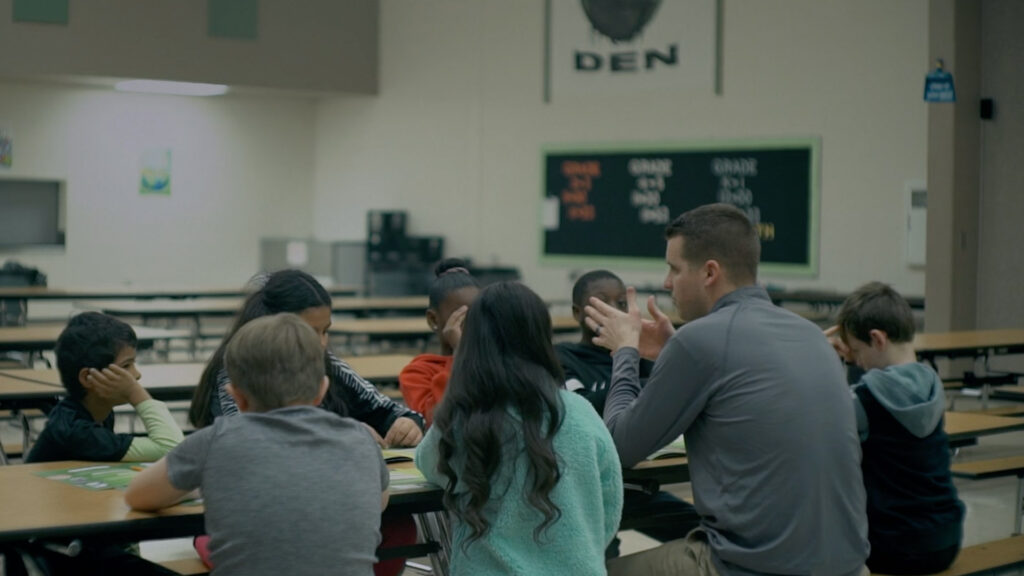
In the Discovery Series, this is why the relationship between the Discovery Guide and the student is the core of the program. The workbook prompts and group discussions are the structure — but the relationship is the engine.
2. A Mirror of Worth
Children internalize how they’re seen by the adults in their lives. A child who grows up feeling dismissed, ignored, or judged begins to believe: “I don’t matter. My thoughts don’t count. My dreams aren’t realistic.”
But a child who has even one adult who genuinely listens, asks thoughtful questions, and believes in them internalizes a different message: “I matter. My story is worth telling. My future is worth dreaming about.”
Dr. Robert Brooks, a Harvard Medical School psychologist specializing in resilience, calls these adults “charismatic adults” — people who change a child’s life not through grand gestures, but by communicating, in small consistent ways: “I believe in you.” [^6]
3. Co-Regulation and Brain Development
As we explored in our article on the neuroscience of listening, a caring adult helps regulate a child’s nervous system. This isn’t just emotional — it’s biological. When a child experiences consistent, calm, attuned presence from an adult, their stress response system learns to calm down. Their prefrontal cortex (the part of the brain responsible for planning, decision-making, and emotional regulation) gets the developmental support it needs. [^7]
One relationship literally shapes brain architecture.
4. A Model of Healthy Relationship
For children growing up in environments of chaos, addiction, or instability, a caring adult may be the first example they’ve seen of what a healthy relationship looks like — consistency, trustworthiness, boundaries, respect, and unconditional positive regard.
This isn’t just about feeling good. It’s about learning a pattern that will shape every future relationship — friendships, romantic partners, coworkers, and eventually, their own children.
The Rewriting Futures Framework: Every Child Deserves One
This research is why Rewriting Futures is built the way it is.
The Discovery Series isn’t designed to replace a caring adult — it’s designed to give that adult the structure, time, and permission to build the relationship that changes everything.
Teachers tell us all the time: “I went into education to build relationships with kids. But I never have time.”
Mentors tell us: “I want to go deep with my mentee, but I don’t always know how to start those conversations.”
Coaches tell us: “I see the kids on my team struggling, but I’m not a counselor — I don’t know what to say.”
The Discovery Series is the answer to all three.
It gives educators, mentors, and caring adults:
- 7 intentional sessions to go deep with a child or small group
- Structured prompts that invite vulnerability and storytelling
- Permission to ask the questions that matter — about home, about struggles, about dreams
- Ongoing check-in tools to keep the relationship alive after the series ends
The program doesn’t do the work. The person does. The Discovery Guide — the teacher, mentor, coach, youth worker — is the caring adult. The curriculum just creates the conditions for that relationship to go deeper, faster.
It Doesn’t Take Much. It Just Takes Someone.
One of the most hope-giving truths in all of this research is how accessible it is.
You don’t need a master’s degree in counseling. You don’t need to have lived a perfect life. You don’t need to have all the answers.
You just need to show up. Listen. Care. Believe in them.
Dr. Robert Block, former president of the American Academy of Pediatrics, put it this way:
“Adverse childhood experiences are the single greatest unaddressed public health threat facing our nation today.”[^8]
But he also said this:
“The cost of prevention is remarkably small — sometimes as small as a caring adult and a few intentional moments.”
That’s the opportunity in front of every teacher, mentor, coach, and youth worker reading this.
You are that caring adult.
The child sitting across from you in the Discovery session — the one who’s quiet, or guarded, or acting out — they’re one relationship away from rewriting their future.
And you might be that relationship.
How to Be That One Caring Adult
If you’re a Discovery Guide, mentor, teacher, or anyone working with kids, here’s what the research tells us matters most:
✅ Show up consistently. Reliability builds trust. Trust builds safety. Safety opens the door to transformation.
✅ Listen more than you talk. Your presence and attention are the intervention. Resist the urge to fix, advise, or rescue. Just listen.
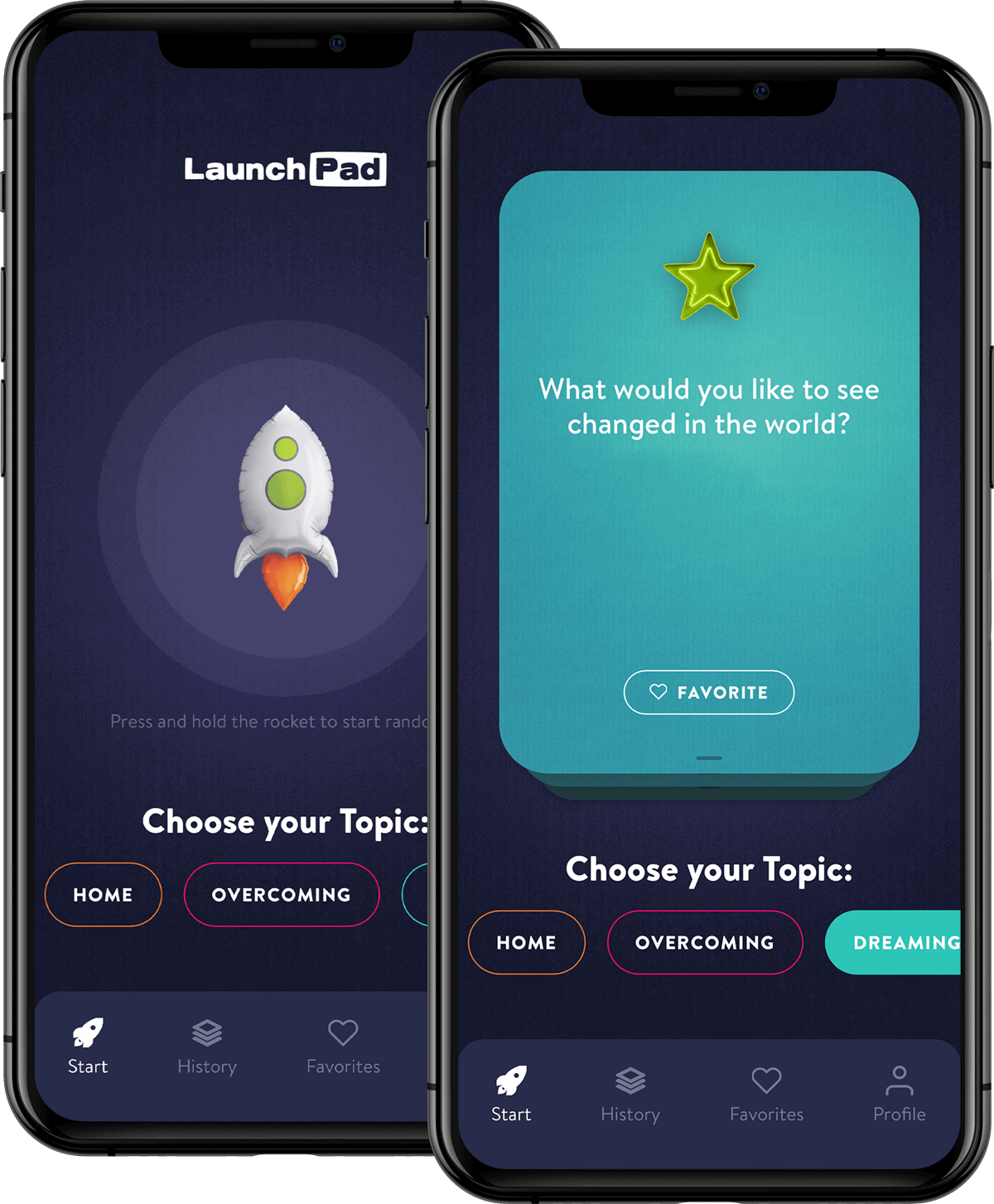
✅ Ask open-ended questions. The Discovery workbook prompts do this by design — they invite storytelling, reflection, and dreaming.
✅ Believe in them — out loud. Say things like: “I’m so glad you shared that with me.” “You’re capable of more than you realize.” “Your future is full of possibility.”
✅ Stay in it for the long haul. One conversation matters. But a relationship over time — even just a semester, a sports season, a school year — that’s what creates lasting change.
Every Kid. One Adult. A Future Rewritten.
Josh Shipp’s quote isn’t just inspirational. It’s backed by decades of research and lived out in thousands of lives every day.
Every kid is one caring adult away from being a success story.
The question is: Will you or your team be those adults?
References
[^1]: Felitti, V. J., Anda, R. F., et al. (1998). “Relationship of Childhood Abuse and Household Dysfunction to Many of the Leading Causes of Death in Adults: The Adverse Childhood Experiences (ACE) Study.” American Journal of Preventive Medicine, 14(4), 245-258. https://www.ajpmonline.org/article/S0749-3797(98)00017-8/fulltext00017-8/fulltext)
[^2]: Center on the Developing Child at Harvard University. “Resilience.” https://developingchild.harvard.edu/science/key-concepts/resilience/
[^3]: National Scientific Council on the Developing Child. (2015). “Supportive Relationships and Active Skill-Building Strengthen the Foundations of Resilience.” Working Paper 13. https://developingchild.harvard.edu/resources/supportive-relationships-and-active-skill-building-strengthen-the-foundations-of-resilience/
[^4]: Tierney, J. P., Grossman, J. B., & Resch, N. L. (1995). “Making a Difference: An Impact Study of Big Brothers Big Sisters.” Public/Private Ventures. https://www.bbbs.org/research/
[^5]: Bowlby, J. (1988). A Secure Base: Parent-Child Attachment and Healthy Human Development. New York: Basic Books.
[^6]: Brooks, R., & Goldstein, S. (2001). Raising Resilient Children. McGraw-Hill.
[^7]: Perry, B. D., & Szalavitz, M. (2017). The Boy Who Was Raised as a Dog: And Other Stories from a Child Psychiatrist’s Notebook. Basic Books.
[^8]: Block, R. W., quoted in American Academy of Pediatrics press release. (2014). “AAP: Toxic Stress Threatens Kids’ Long-Term Health.” https://www.aap.org/