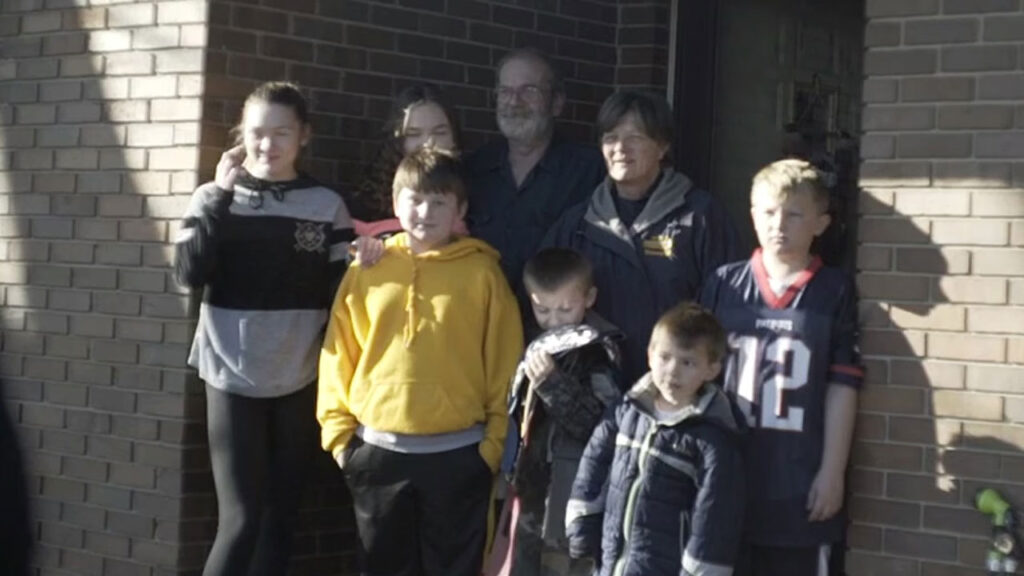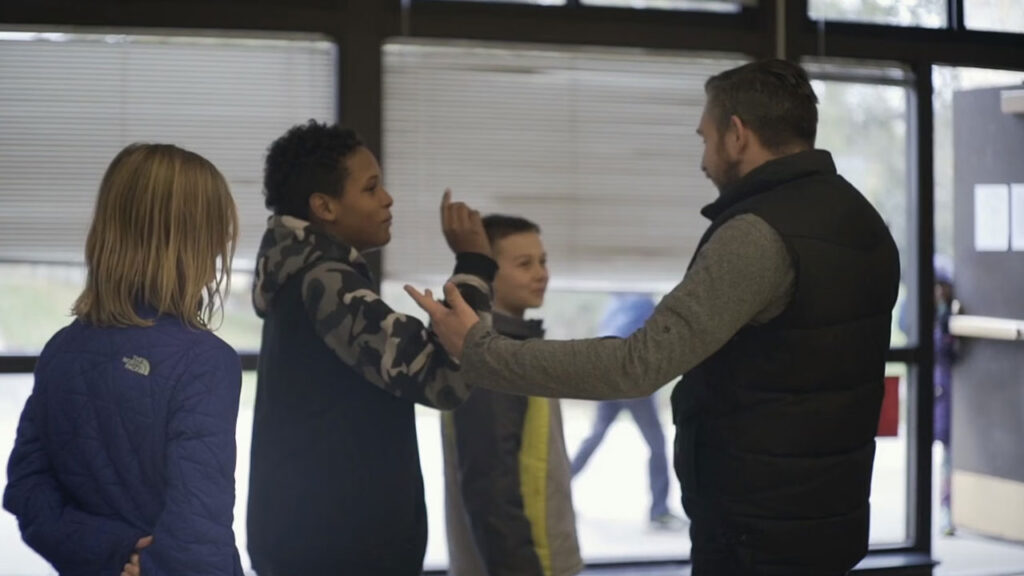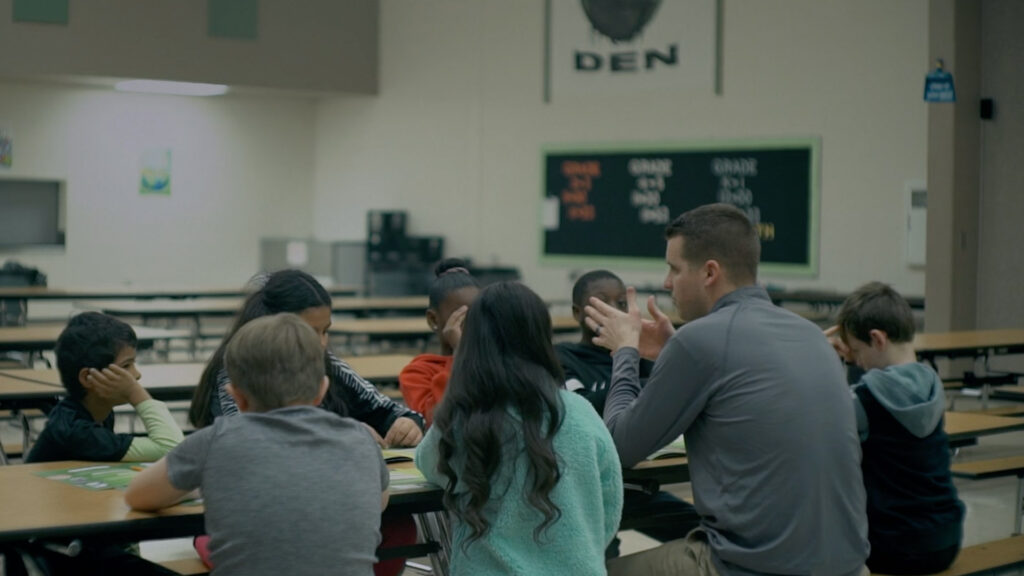
A child’s brain doesn’t just need information — it needs relationship.
When a fourth-grader sits across from their Discovery Guide and shares something they’ve never told anyone before — “My dad left last year and I don’t know if he’s coming back” — something profound happens in that moment. It’s not just emotional. It’s not just relational. It’s neurological.
The act of being truly heard by a caring adult doesn’t just make a child feel better. It literally changes their brain.
And for children carrying trauma, adverse experiences, or chronic stress, that change can be the difference between a future defined by their past and a future they get to rewrite.
The Brain on Trauma: What Happens When No One Listens
To understand why listening matters so much, we first need to understand what trauma does to a developing brain.
Dr. Bruce Perry, Senior Fellow at the Child Trauma Academy and one of the world’s leading experts on childhood trauma, describes the brain as developing in a “use-dependent” way. [^1] This means the brain organizes itself based on the experiences it has — especially early in life.
When a child grows up in an environment of chronic stress, unpredictability, or trauma — what researchers call “adverse childhood experiences” (ACEs) — their brain adapts to survive that environment. The survival parts of the brain (the brainstem and limbic system) become hyperactive, while the parts responsible for reasoning, planning, and emotional regulation (the prefrontal cortex) remain underdeveloped. [^2]
The result? A child who:
- Is constantly on high alert (hypervigilance)
- Struggles to regulate emotions
- Has difficulty concentrating in school
- May seem “difficult,” “defiant,” or “checked out”
But here’s what most people miss: these aren’t character flaws. They’re adaptations. The child’s brain is doing exactly what it was designed to do — survive.
The tragedy is that these survival strategies, while useful in a chaotic home, become obstacles in a classroom, a friendship, or a future.
Enter the Caring Adult: How Relationship Rewires the Brain
This is where the neuroscience of listening becomes hope-giving.
Dr. Stephen Porges, creator of Polyvagal Theory, has shown that the human nervous system is constantly scanning the environment for cues of safety or danger — a process he calls “neuroception.” [^3] When a child’s nervous system detects danger (even subconsciously), it triggers a stress response. But when it detects safety — particularly through the presence of a calm, attuned, caring adult — the nervous system shifts into a state where connection, learning, and growth become possible.
This is why a child who seems shut down or defensive in one setting can suddenly open up with a trusted mentor, teacher, or coach. It’s not that they’re being manipulative or selective. It’s that their nervous system has finally signaled: “It’s safe here. You can let your guard down.”
And when that happens — when a child feels truly seen, heard, and safe — their brain begins to change.
What “Being Heard” Does to the Brain
1. It Regulates the Stress Response System
When a child shares something difficult and an adult listens without judgment, interruption, or trying to fix it — the child’s autonomic nervous system begins to calm. The heart rate slows. Cortisol (the stress hormone) decreases. The prefrontal cortex comes back online.[^4]
Dr. Dan Siegel, clinical professor of psychiatry at UCLA and founder of interpersonal neurobiology, calls this process “co-regulation.” [^5] A regulated adult helps a dysregulated child find their way back to calm — not through advice or solutions, but through presence and attunement.
Over time, repeated experiences of being heard and co-regulated teach the child’s brain a new pattern: “I can feel big feelings and not be overwhelmed by them. I can share hard things and not be abandoned.”
2. It Builds Neural Pathways for Connection
Every time a child has a positive relational experience — being listened to, affirmed, believed — their brain strengthens the neural pathways associated with trust, safety, and secure attachment.[^6]
This is the “use-dependent” principle Dr. Perry describes. The brain gets better at what it practices. If a child practices being dismissed, ignored, or shamed, those pathways become highways. But if a child practices being heard, valued, and responded to with care, those pathways grow stronger.
The implication for Discovery Guides is profound: Every session where you listen deeply, ask meaningful questions, and show genuine interest isn’t just a nice conversation. You’re literally helping rewire a child’s brain for healthier relationships — now and for the rest of their life.
3. It Activates the Prefrontal Cortex (Where Dreams Live)
Trauma keeps kids stuck in survival mode — the lower, reactive parts of the brain. But when a child feels safe enough to share their story, to name their struggles, and to imagine a different future, the prefrontal cortex — the brain’s executive function center — comes back online.[^7]
This is the part of the brain responsible for:
- Planning and goal-setting
- Impulse control
- Problem-solving
- Imagining future possibilities
Without safety, there is no dreaming. A child in survival mode cannot think about college, career, or breaking generational cycles — their brain is too busy scanning for the next threat.
But in the presence of a caring adult who listens and believes in them? The prefrontal cortex wakes up. Suddenly, questions like “What do you want to be when you grow up?” aren’t abstract. They’re possible.
Why Listening is More Powerful Than Advice
One of the most counterintuitive findings in trauma research is this: listening is more healing than solving.
When adults rush to fix, advise, or reassure (“It’ll be okay!” “Just think positive!” “Have you tried…?”), they often inadvertently shut down the very process that brings healing. The child learns: “My feelings are too much. I need to hide them. No one really wants to hear this.”
But when an adult listens fully — reflects back what they’re hearing, validates the difficulty, and resists the urge to rescue — the child’s brain gets the message: “What I’m feeling is real. I’m not crazy. I’m not alone. And I can handle this.” [^8]
Dr. Bessel van der Kolk, author of The Body Keeps the Score and one of the world’s foremost trauma researchers, writes:
“Being able to feel safe with other people is probably the single most important aspect of mental health; safe connections are fundamental to meaningful and satisfying lives.” [^9]
The Discovery Series creates the structure for those safe connections to form. The workbook gives kids language. The sessions give them time. And the Discovery Guide gives them the one thing their brain needs most: someone who listens.
What This Means for Discovery Guides
You don’t need to be a therapist. You don’t need to have all the answers. You don’t need to fix every problem a child brings to you.
What you need to do is listen.
- Listen without interrupting.
- Listen without judging.
- Listen without trying to make it better too quickly.
- Ask follow-up questions that show you’re tracking with them: “What was that like for you?” “How did you feel when that happened?”
- Reflect back what you’re hearing: “It sounds like that was really hard.”
- Sit with the weight of what they’re carrying, and let them know they don’t have to carry it alone.
Because when you do that — when you create a space where a child feels truly heard — you’re not just building a relationship.
You’re changing their brain.
You’re teaching their nervous system what safety feels like.
You’re strengthening the neural pathways that will help them trust, connect, and dream.
You’re giving them the foundation they need to rewrite their future.
One Caring Adult. One Conversation. One Changed Brain.
The research is clear: relationship is the key variable.
Not curriculum. Not programs. Not resources.
People.
Caring adults who show up, listen deeply, and refuse to let a child’s past define their future.
That’s what the Discovery Series creates space for. That’s what you do every time you lean in, ask a good question, and genuinely listen to the answer.
A child’s brain doesn’t just need information. It needs relationship.
And when they get it? Everything changes.
References
[^1]: Perry, B. D., & Szalavitz, M. (2006). The Boy Who Was Raised as a Dog: And Other Stories from a Child Psychiatrist’s Notebook. Basic Books. Perry’s work on the neurosequential model demonstrates how developmental trauma impacts brain organization. More at ChildTrauma.org
[^2]: Teicher, M. H., & Samson, J. A. (2016). Annual Research Review: Enduring neurobiological effects of childhood abuse and neglect. Journal of Child Psychology and Psychiatry, 57(3), 241-266. https://doi.org/10.1111/jcpp.12507
[^3]: Porges, S. W. (2011). The Polyvagal Theory: Neurophysiological Foundations of Emotions, Attachment, Communication, and Self-regulation. W.W. Norton & Company. https://www.stephenporges.com
[^4]: Cozolino, L. (2014). The Neuroscience of Human Relationships: Attachment and the Developing Social Brain (2nd ed.). W.W. Norton & Company.
[^5]: Siegel, D. J., & Bryson, T. P. (2020). The Power of Showing Up: How Parental Presence Shapes Who Our Kids Become and How Their Brains Get Wired. Ballantine Books.
[^6]: National Scientific Council on the Developing Child. (2004). Young Children Develop in an Environment of Relationships. Working Paper No. 1. Harvard University Center on the Developing Child. https://developingchild.harvard.edu
[^7]: Arnsten, A. F. (2009). Stress signalling pathways that impair prefrontal cortex structure and function. Nature Reviews Neuroscience, 10(6), 410-422. https://doi.org/10.1038/nrn2648
[^8]: Levine, P. A., & Kline, M. (2007). Trauma Through a Child’s Eyes: Awakening the Ordinary Miracle of Healing. North Atlantic Books.
[^9]: van der Kolk, B. (2014). The Body Keeps the Score: Brain, Mind, and Body in the Healing of Trauma. Viking. Page 81.
Published by Rewriting Futures | RewritingFutures.com