The Crisis We’re Facing
Today’s children and adolescents are experiencing anxiety at rates never before documented. The CDC reports that between 2009 and 2021, the percentage of high school students experiencing persistent feelings of sadness or hopelessness rose from 26% to 42%[^1]. Emergency room visits for mental health crises among youth increased 31% between 2019 and 2020 alone[^2].
This isn’t happening in a vacuum. Our young people are navigating a perfect storm:
The Convergence of Stressors
Social Media Overexposure: Research published in JAMA Psychiatry found that adolescents who spent more than 3 hours daily on social media faced double the risk of mental health problems, including depression and anxiety[^3]. The constant comparison, cyberbullying, and dopamine-driven feedback loops create what psychologist Jean Twenge calls “the most anxious generation.”
Climate Anxiety: A 2021 international survey of 10,000 young people (ages 16-25) found that 59% were very or extremely worried about climate change, and 45% said their feelings about climate change negatively affected their daily life[^4]. This phenomenon — termed “eco-anxiety” — represents a new dimension of childhood stress.
Systemic Uncertainty: The American Psychological Association’s 2023 Stress in America survey revealed that Gen Z adults (18-26) report the highest stress levels of any generation, with mass shootings, political division, and economic instability as top concerns[^5]. These fears filter down to younger children through household stress and media exposure.
What the Science Says About Building Resilience
The good news: decades of research point to a single, powerful intervention that works across contexts — caring relationships with consistent adults.
The ACE Study Foundation
The landmark Adverse Childhood Experiences (ACE) Study, conducted by Kaiser Permanente and the CDC, established that childhood trauma has profound long-term health consequences[^6]. But equally important was the discovery of protective factors — elements that buffer against adversity.
Dr. Robert Block, former president of the American Academy of Pediatrics, stated: “Adverse childhood experiences are the single greatest unaddressed public health threat facing our nation today”[^7]. Yet the ACE research also revealed that stable, responsive relationships are the most critical protective factor.
The Harvard Center on the Developing Child
Harvard’s Center on the Developing Child has spent two decades synthesizing neuroscience, developmental psychology, and intervention research. Their core finding: “The single most common factor for children who develop resilience is at least one stable and committed relationship with a supportive parent, caregiver, or other adult”[^8].
These relationships provide:
- Co-regulation: Adults help children manage overwhelming emotions through calm presence
- Serve-and-return interactions: Responsive back-and-forth that builds neural architecture
- Modeling: Demonstrations of healthy coping and problem-solving
- Belonging: The foundational sense that “I matter to someone”
Social-Emotional Learning That Works
A 2011 meta-analysis of 213 school-based SEL programs (involving 270,000+ students) found that participants demonstrated:
- 11 percentile-point gains in academic achievement
- Improved social and emotional skills
- Better attitudes and behaviors
- Decreased emotional distress[^9]
But here’s the critical nuance: SEL programs work best when embedded in relationships, not delivered as scripted curriculum alone.
The Collaborative for Academic, Social, and Emotional Learning (CASEL) emphasizes that effective SEL requires both explicit instruction and integration into supportive relationships and school climate[^10].
Three Evidence-Based Strategies for Building Hope
1. Create Structured Opportunities for Vulnerable Conversation
Research from the Search Institute on Developmental Relationships shows that young people need adults who:
- Express care (“You matter to me”)
- Challenge growth (“I believe you can do better”)
- Provide support (“I’m here when you need help”)
- Share power (“I want to hear your perspective”)
- Expand possibilities (“I see a future for you”)[^11]
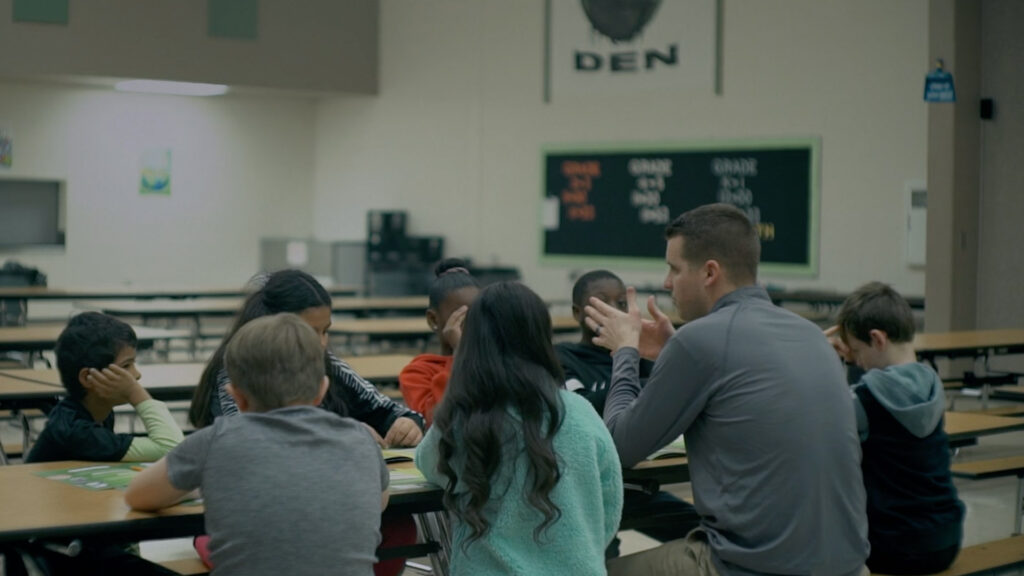
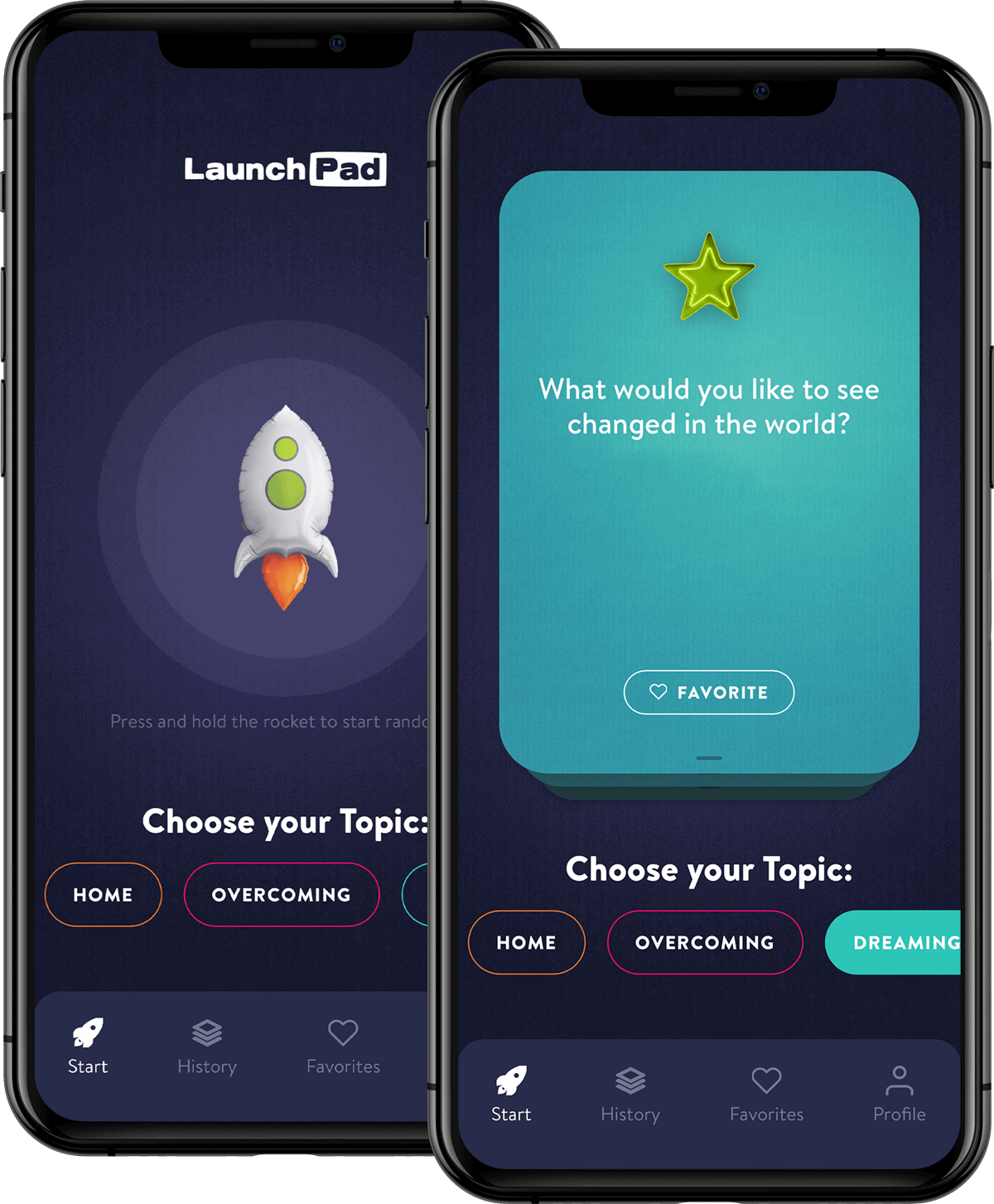
Practical Application: Programs like Discovery Series create intentional weekly touchpoints where a consistent adult asks open-ended questions, listens deeply, and helps students name both challenges and dreams. This structure gives permission for vulnerability that might not emerge in typical classroom environments.
2. Teach Coping Skills Through Modeling, Not Lecturing
A 2020 study in Child Development found that children whose parents modeled healthy emotional regulation — naming their feelings, demonstrating coping strategies — developed stronger emotion regulation skills themselves[^12].
Practical Application: Rather than telling anxious students “don’t worry” or “calm down,” effective adults:
- Name their own emotions: “I’m feeling frustrated about this situation”
- Demonstrate coping: “I’m going to take three deep breaths before we continue”
- Normalize struggle: “This is hard. It makes sense that you’re feeling this way”
- Problem-solve together: “What’s one small thing we could try?”
3. Anchor Identity in Purpose, Not Performance
Youth development expert Peter Benson’s research on “Sparks” — the interests, skills, and passions that light young people up — found that adolescents who identified and pursued their sparks demonstrated higher thriving indicators, even in the face of adversity[^13].
Similarly, Stanford psychologist William Damon’s work on purpose shows that young people with a sense of purpose beyond themselves demonstrate greater resilience, persistence, and life satisfaction[^14].
Practical Application: Move conversations beyond “What do you want to be?” to:
- “What do you care about?”
- “What breaks your heart when you see it in the world?”
- “What would you want to change if you could?”
- “Who do you want to help?”
This shifts identity from achievement-based to contribution-based — a more durable foundation in uncertain times.
Why Relationship IS the Intervention
Josh Shipp, teen behavior expert, captures it perfectly: “Every kid is one caring adult away from being a success story”[^15].
This isn’t aspirational language — it’s mechanistic. Here’s what happens neurologically and psychologically when a young person experiences consistent, attuned adult presence:
Neurologically: The developing brain requires co-regulation to build self-regulation capacity. Dr. Bruce Perry’s research shows that “relationships are the agents of change”[^16] because they literally shape neural pathways for stress response.
Psychologically: Attachment theory (Bowlby, Ainsworth) demonstrates that secure relationships create an internalized “secure base” — the psychological foundation that allows risk-taking, exploration, and resilience[^17].
Practically: When a student trusts an adult enough to share a difficult home situation, that relationship becomes the intervention point — connecting to resources, providing stability, offering hope.
A Call to Reframe Prevention
Prevention costs far less than intervention — both financially and in human terms. Yet most systems remain reactive:
- We wait for crisis before offering counseling
- We respond to behavioral problems rather than building emotional capacity
- We treat symptoms (anxiety, depression) rather than strengthening protective factors (relationships, purpose, coping skills)
The research is unequivocal: an ounce of relational prevention is worth a pound of clinical cure.
Every dollar invested in quality early childhood programs returns $7-$10 in reduced costs for remediation, health care, and criminal justice[^18]. Every at-risk student connected to a mentor is 55% more likely to enroll in college and 78% more likely to volunteer regularly[^19].
Moving Forward: What Adults Can Do Now
- Be consistently present — not perfect, just consistent
- Ask better questions — fewer “How was school?” and more “What was hard today?”
- Listen before fixing — sometimes being heard is the healing
- Name strengths — help young people see what’s right about them, not just what’s wrong
- Point toward possibility — “Your story isn’t over. We can rewrite what comes next.”
The future isn’t written yet. That’s both the source of anxiety and the foundation of hope.
References & Sources
[^1]: Centers for Disease Control and Prevention. (2023). Youth Risk Behavior Survey Data Summary & Trends Report: 2011-2021. https://www.cdc.gov/healthyyouth/data/yrbs/yrbsdatasummaryandtrends.htm
[^2]: Yard, E., et al. (2021). Emergency Department Visits for Suspected Suicide Attempts Among Persons Aged 12–25 Years Before and During the COVID-19 Pandemic. Morbidity and Mortality Weekly Report, 70(24), 888-894. https://www.cdc.gov/mmwr/volumes/70/wr/mm7024e1.htm
[^3]: Riehm, K. E., et al. (2019). Associations Between Time Spent Using Social Media and Internalizing and Externalizing Problems Among US Youth. JAMA Psychiatry, 76(12), 1266-1273. https://jamanetwork.com/journals/jamapsychiatry/fullarticle/2749480
[^4]: Hickman, C., et al. (2021). Climate anxiety in children and young people and their beliefs about government responses to climate change. The Lancet Planetary Health, 5(12), e863-e873. https://www.thelancet.com/journals/lanplh/article/PIIS2542-5196(21)00278-3/fulltext
[^5]: American Psychological Association. (2023). Stress in America 2023: A Nation Recovering from Collective Trauma. https://www.apa.org/news/press/releases/stress
[^6]: Felitti, V. J., et al. (1998). Relationship of Childhood Abuse and Household Dysfunction to Many of the Leading Causes of Death in Adults. American Journal of Preventive Medicine, 14(4), 245-258. https://www.ajpmonline.org/article/S0749-3797(98)00017-8/fulltext
[^7]: Block, R. W., & Krebs, N. F. (2005). Failure to Thrive as a Manifestation of Child Neglect. Pediatrics, 116(5), 1234-1237. (Cited in ACE awareness campaigns by American Academy of Pediatrics)
[^8]: Center on the Developing Child at Harvard University. (2015). Supportive Relationships and Active Skill-Building Strengthen the Foundations of Resilience: Working Paper 13. https://developingchild.harvard.edu/resources/supportive-relationships-and-active-skill-building-strengthen-the-foundations-of-resilience/
[^9]: Durlak, J. A., et al. (2011). The Impact of Enhancing Students’ Social and Emotional Learning: A Meta-Analysis of School-Based Universal Interventions. Child Development, 82(1), 405-432. https://casel.org/research/
[^10]: Collaborative for Academic, Social, and Emotional Learning (CASEL). (2020). CASEL’s SEL Framework. https://casel.org/fundamentals-of-sel/what-is-the-casel-framework/
[^11]: Search Institute. (2020). Developmental Relationships Framework. https://searchinstitute.org/developmental-relationships/
[^12]: Morris, A. S., et al. (2020). The Role of the Family Context in the Development of Emotion Regulation. Child Development, 91(3), e537-e553.
[^13]: Benson, P. L. (2008). Sparks: How Parents Can Help Ignite the Hidden Strengths of Teenagers. Jossey-Bass.
[^14]: Damon, W. (2008). The Path to Purpose: How Young People Find Their Calling in Life. Free Press.
[^15]: Shipp, J. (n.d.). Quoted widely in youth development literature and speaking engagements. https://joshshipp.com
[^16]: Perry, B. D., & Winfrey, O. (2021). What Happened to You? Conversations on Trauma, Resilience, and Healing. Flatiron Books.
[^17]: Bowlby, J. (1988). A Secure Base: Parent-Child Attachment and Healthy Human Development. Basic Books.
[^18]: Heckman, J. J. (2006). Skill Formation and the Economics of Investing in Disadvantaged Children. Science, 312(5782), 1900-1902. https://science.sciencemag.org/content/312/5782/1900
[^19]: Big Brothers Big Sisters of America. (n.d.). Impact Research. https://www.bbbs.org/research/